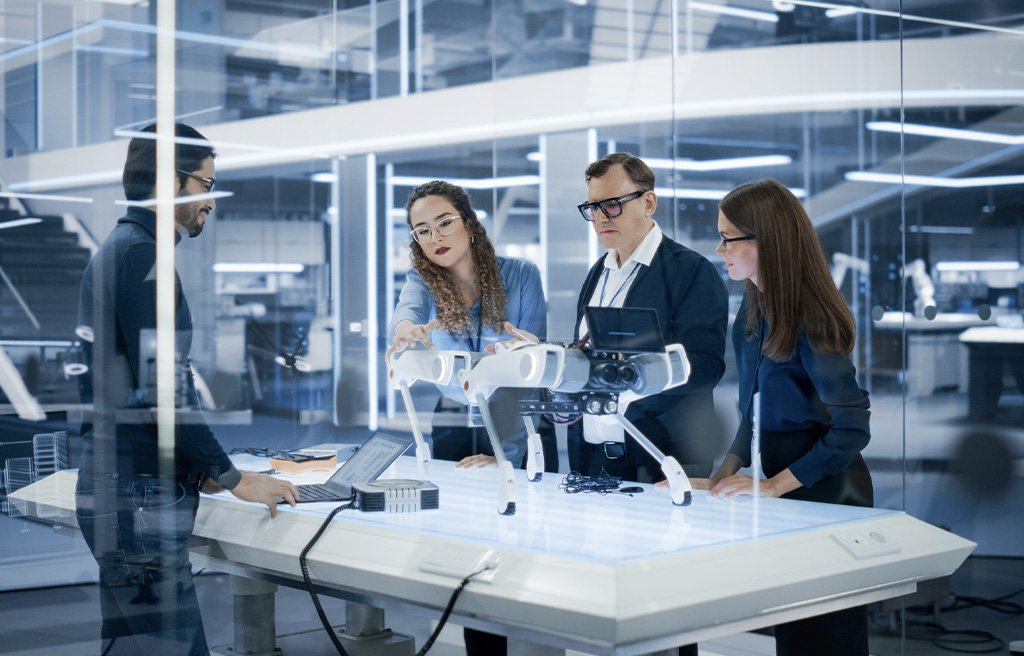
Startup Tales | Kaigos, a deep-tech startup that develops AI-powered robotic welders
The Treviso-based deep-tech startup develops AI-powered robotic welders capable of operating in dynamic, unstructured environments. It brings welding automation to settings that were previously beyond its reach, starting with manufacturing SMEs.
A new approach to robotics for welding
There is a paradox at the heart of European manufacturing. Welding is everywhere, from metal fabrication and mechanical engineering to plant engineering, pharmaceuticals and energy, making it strategically important to the continent’s competitiveness. Yet welders are disappearing: it is a high-risk occupation with limited appeal among young people, and industry estimates suggest that the shortfall will reach approximately 1.2 million by 2030.
The natural answer would be robots, but this has not worked for most companies. Traditional welding robots require specialist programming, lengthy setup times and repetitive production runs, whereas Italian manufacturing is characterised by high variability and short orders. As a result, welding automation has remained largely confined to high-volume production.
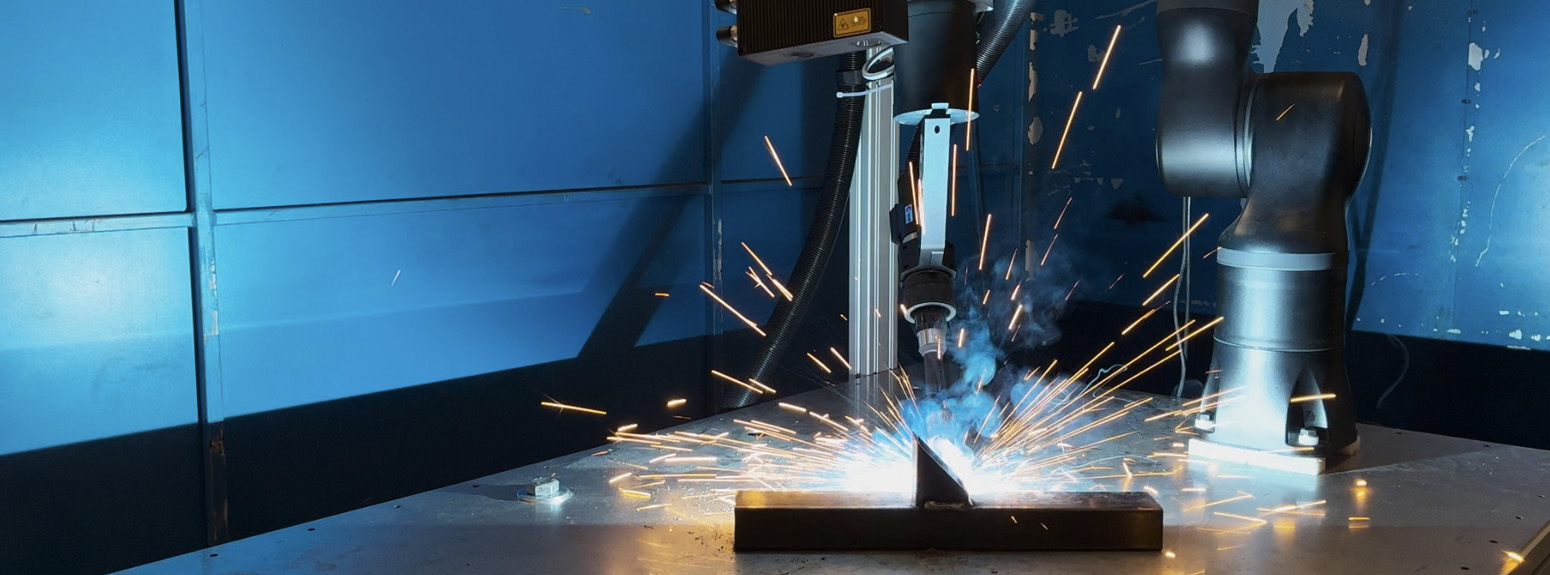
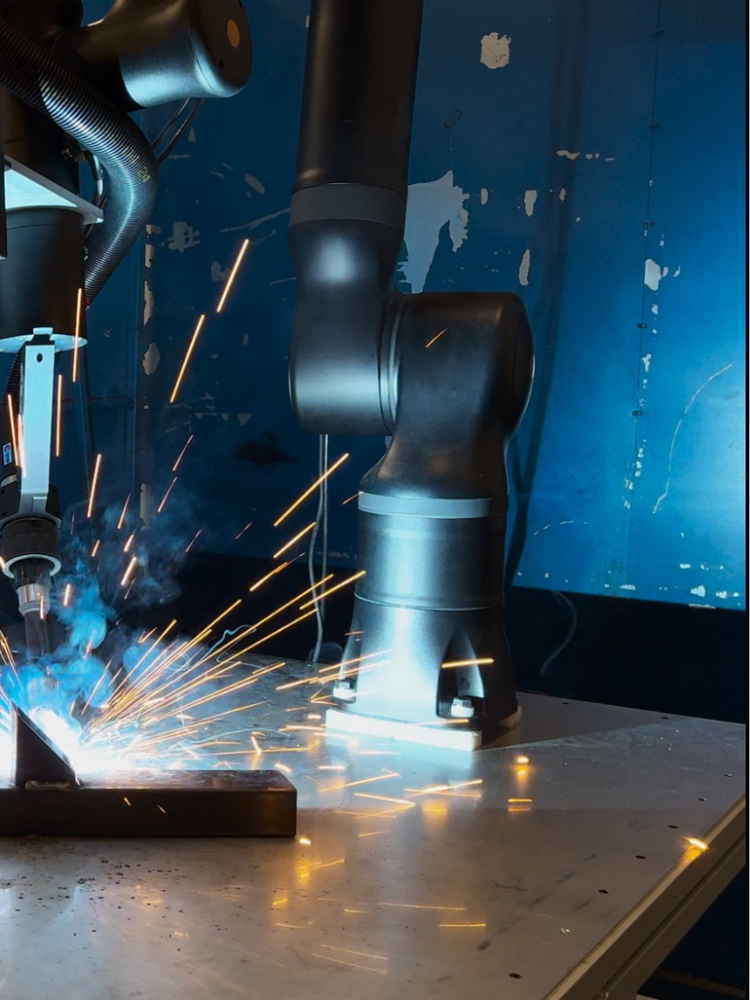
This is the space in which Kaigos operates. The innovative deep-tech startup, headquartered in Treviso, was founded in late 2022 by Giacomo Dario, now Chair of the Board of Directors, and Marco Zorzi, Chief Executive Officer. The company develops k.weld AI, an AI-powered robotic welder: the operator provides the component drawing and loads the part into the machine, after which the software and robot take care of the rest.
“Our job is to connect industry with advanced technology,” explains Giacomo Dario. “With a strong background in both autonomous driving and welding, we are developing technology that enables robots to work safely and to a higher standard in dynamic, unstructured environments.”
The benefits can be measured across three dimensions: productivity, which has doubled in some of the cases managed by the company; economics, with savings of around €160,000 per year for each installation; and health, because operators no longer breathe welding fumes. The target market is worth €11.7 billion and is growing by 11.5% annually; Kaigos has identified approximately 90,000 potential installations.
Kaigos: origins and growth
Kaigos was established in December 2022 and has been operational since 2023. Its founders have international backgrounds: Marco Zorzi, Chief Executive Officer, earned an MSc in Robotics from ETH Zurich; Giacomo Dario, Chair of the Board, holds an MSc in Autonomous Systems from EIT Digital. They are supported by a small core technical team, including Luca Bonamini, Senior Robotics Engineer, and Alessio Narder, Full-Stack Developer, with additional roles currently being recruited.
“We wanted to build something ambitious of our own, returning to our country after studying abroad,” says Zorzi. “We also wanted to create a stimulating environment for young engineers who want to address the global market without having to leave Italy. Veneto is the beating heart of Made in Italy welding: it is the right place to build this technology, not a place to leave.”
The first two years were devoted to building the technical foundations. Between 2023 and 2024, Kaigos delivered a portfolio of advanced robotics and autonomy engineering projects for industrial clients, ranging from computer vision for laser cutting and automated path planning to a hexapod-based robotic platform for the railway sector.
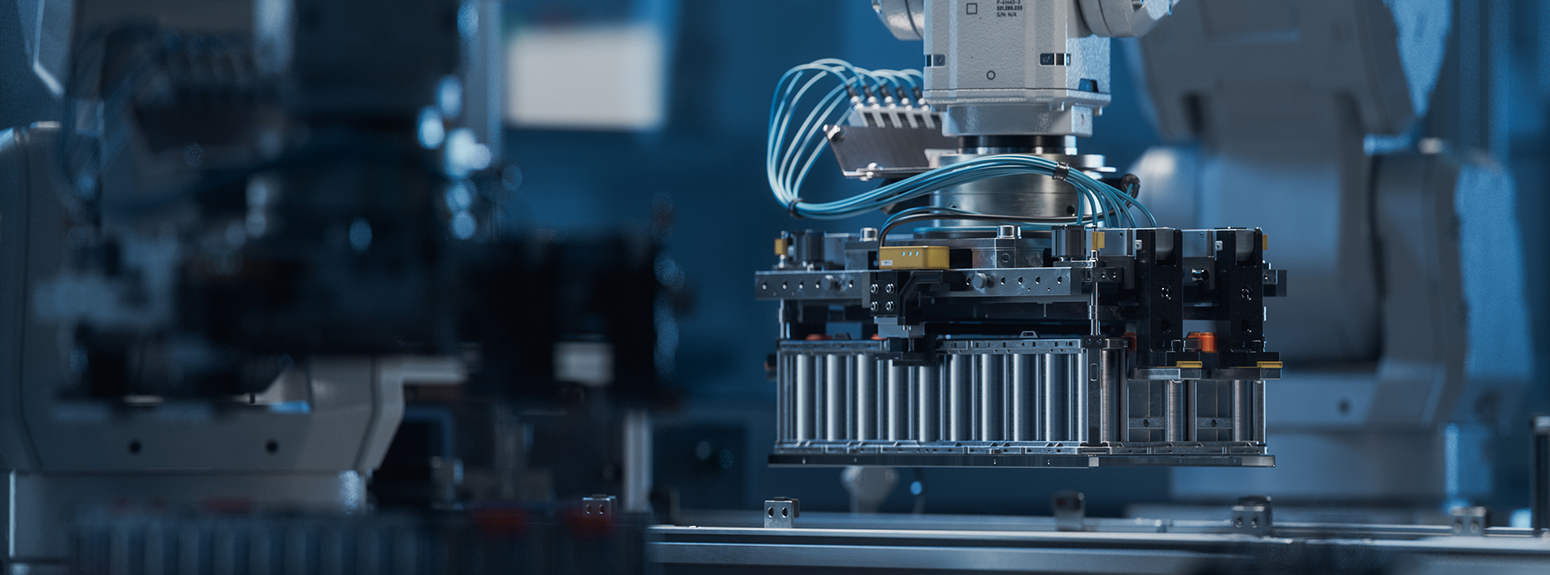
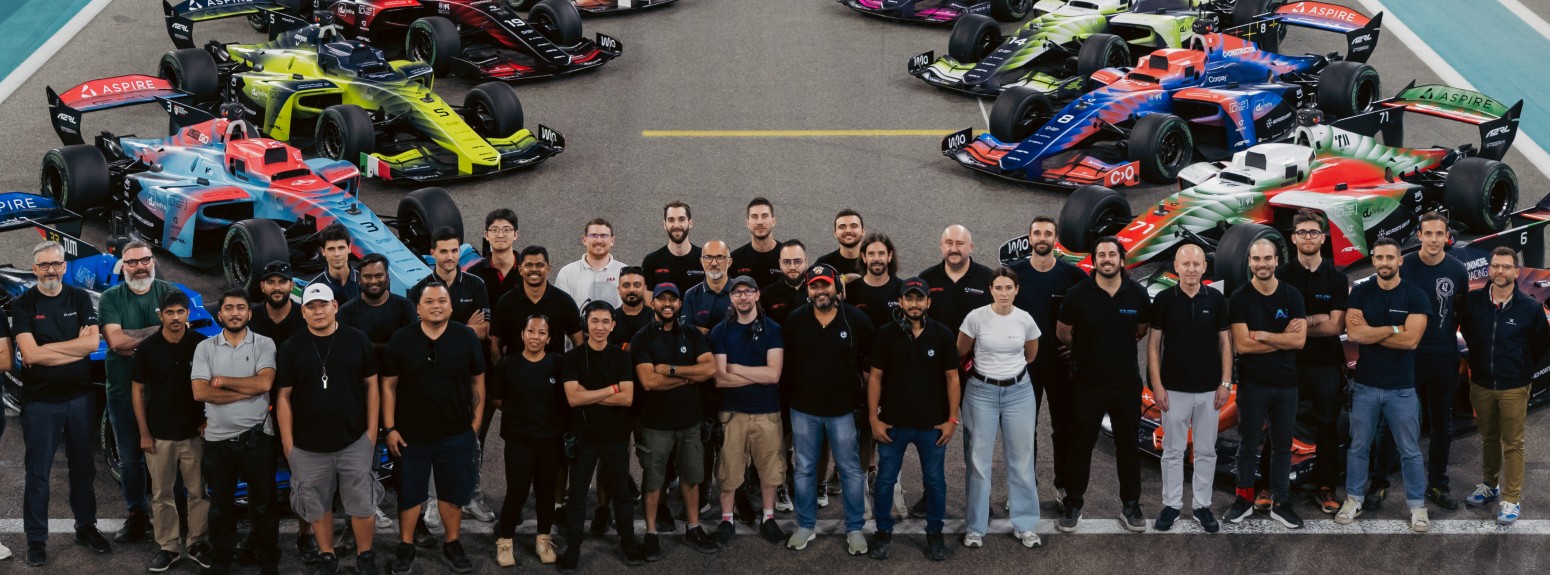
That foundation led to k.weld, the intelligent welding line, and k.pal, a flexible palletising solution for highly variable production: the transition from bespoke consulting to repeatable, deployable products. International expansion began in 2025, with entry into the United Arab Emirates through Aspire and support for the development of autonomous-driving software for the Abu Dhabi Autonomous Racing League, of which Kaigos is an official supplier.
All of this was achieved through bootstrapping, a feature that distinguishes Kaigos from many deep-tech startups: no investment round and no external venture capital. Research, development, patenting and team growth were financed exclusively through revenue from industrial projects and public grants awarded through competitive calls. The company’s equity has never been opened to third-party investors.
“Self-financing makes us slower, but it forces us to focus on customers’ real problems,” Dario acknowledges. “The automation market does not favour startups: it is built on reliability and systems that must operate for years. Precisely for this reason, it is where a genuine advantage can be created. Having PhDs in robotics is relatively easy; combining that expertise with hands-on experience among fumes and operating production systems is much rarer.”
The journey has brought recognition, including selection among the Top 50 startups at Slush 2024 in Helsinki, participation in GITEX Europe and the London AI Summit, funding from the Veneto Region for SME research and innovation, and an operating base at NOI TechPark in Bolzano to serve the Central European market.
Kaigos technology and its industrial applications
What makes a welding environment complex
A traditional welding robot works well under three conditions: the component is identical to the drawing, the surrounding environment is fixed and known, and the process is stable and repeatable. These are the conditions of mass production, and this is where welding automation has remained. In complex environments, none of the three conditions holds. The component never perfectly matches the drawing: tolerances, thermal deformation and assembly clearances create deviations of several millimetres, and a weld seam displaced by one millimetre is an incorrect weld. The environment is unstructured: fabricated products may occupy several cubic metres, geometries can restrict torch access, and obstacles change from one component to another. The process is unstable: the electric arc is sensitive to material, thickness, position and heat input. In mass production these parameters are calibrated once, whereas here they must be determined case by case.
This combination has kept entire industries beyond the reach of automation, leaving operators to handle the largest and most exposed components.
From autonomous driving to the welding torch
Kaigos’s answer comes not from industrial automation, but from autonomy. This is where the company’s dual background becomes a structural advantage. Perceiving an unknown environment, building a reliable representation of it, planning an action and correcting it in real time as conditions change is essentially the same challenge faced by an autonomous vehicle. It is also the work Kaigos performs every day through its autonomy engineering division for the Abu Dhabi Autonomous Racing League.
“Those who come from traditional automation solve variability by eliminating it: dedicated equipment, tighter tolerances and costs passed on to the customer,” Dario observes. “Those who come from autonomy start from the opposite assumption: that the world is disorderly and the system must adapt. We have both capabilities in-house. The first is essential for operating effectively in a real factory; the second opens up environments where no one can currently automate.”
On this basis, the proprietary stack is organised around four pillars, one for each source of complexity. Computer vision reconstructs the actual geometry of the fabricated component, identifies the joint and measures deviations from the drawing. Autonomous planning generates paths, checks which points can be reached and manages collisions, making it possible to process large components without redesigning the cell for every order. Real-time seam tracking continuously corrects the trajectory as the torch welds, making the difference between the designed and actual component irrelevant. Process control manages parametric recipes, typical defects, automated safety functions, and reporting on material and energy consumption.
Upstream, automated calibration eliminates manual programming. Across the entire deployment chain, Kaigos has measured setup times up to 200 times faster than the traditional approach, making it possible to install a complete cell in a single day.
Why the software runs on standard hardware
This leads to a precise industrial choice: not to reinvent the robotic arm, but to build the intelligence that guides it. The hardware is commercially available, including arms, welding machines and off-the-shelf sensors, while the proprietary value lies entirely in the software, which is compatible with robots from different manufacturers. This is not merely a question of cost. A software-based technology can be distributed globally through local partners and integrators, without a hardware supply chain and without replicating production facilities.
A compounding advantage
Every complex environment successfully addressed generates process data that no one else is collecting, because no one else is automating those components. Kaigos intends to use this material to train the world’s most welding-specific AI model: the more challenging environments it tackles, the more capable the model becomes, and the more previously inaccessible environments can be addressed.
On 4 February 2026, Kaigos filed Italian patent application no. 102026000002707, Method for the automated welding of metal parts, covering the entire chain: three-dimensional acquisition of the component and work area, kinematic referencing, detection of the welding zone, adaptive path planning and dynamic optimisation of parameters during execution. The application is currently under examination.
The most advanced application: pharmaceuticals
The most significant test case is the project with TEC-SIM, an Italian centre of excellence in the pharmaceutical sector, at whose premises Kaigos has established its demonstration area. It is a case in which all three sources of complexity occur together: freeze-dryer components are stainless-steel structures of up to 40 cubic metres, each requiring up to 200 hours of welding, with difficult torch access, cumulative deformation and the requirements of a regulated industry. This is also why automation creates greater value here: two hundred hours of welding means two hundred hours of operator exposure to fumes, heat and uncomfortable working positions.
The project is progressing in stages towards an interface that allows the operator to generate the welding program without writing a single line of code. It is underpinned by the trust of TEC-SIM’s owners, Gabriele Da Re and Gabriele Lavina, who are entrepreneurial reference points for the founders.
A pragmatic business model with tailor-made solutions
Kaigos works alongside each company to understand its welding process and define the solution that maximises return on investment. Depending on specific needs, it tailors a solution based on k.weld, ranging from straightforward product installation to a recurring model in which the customer is supported in redesigning its operations.
“It is a model that aligns incentives,” Marco Zorzi explains. “The customer pays more only if it produces more and achieves better results: if the customer improves, we grow with them.”
Alongside the product business, the autonomy engineering division and custom projects remain active, supporting system integrators and technical departments from pre-sales through to production launch. This work also feeds technological advances into the product, and vice versa.
The role of Intesa Sanpaolo and Intesa Sanpaolo Innovation Center in the startup’s growth
Support from Intesa Sanpaolo and Intesa Sanpaolo Innovation Center has been delivered through three programs, each influencing a different dimension of the company: industrial partnerships in Italy, the international market, and entrepreneurial and financial expertise.
Up2Stars: from mentorship to strategic partner
Up2Stars is the program launched by Intesa Sanpaolo in 2022 together with Intesa Sanpaolo Innovation Center to promote and accelerate Italian startups, in line with the guidelines of Italy’s National Recovery and Resilience Plan. The edition in which Kaigos participated covered four strategic sectors, New Materials, Robotics, Aerospace and Design Tech, with ten startups selected for each vertical. Kaigos joined the Robotics vertical.
“The greatest value of Up2Stars was not a generic contact or a showcase; it was the support we received in defining the strategic partnership with TEC-SIM,” Dario says. “Today, TEC-SIM is simultaneously our industrial partner, our pilot customer in the pharmaceutical sector and the location of our demonstration area.”
The programme concluded with a Demo Day attended by investors and companies from the ecosystem, and Kaigos is now among the Robotics startups presented by Intesa Sanpaolo through its communication channels. Alongside this application, the company also applied to Intesa Sanpaolo Assicurazioni’s In Action ESG CLIMATE initiative, dedicated to the green transition.
Global Start Up Program: validating the US market
The second component is the Global Start Up Program run by the Italian Trade Agency, of which Intesa Sanpaolo Innovation Center is a partner. Each year, the programme takes selected Italian startups abroad for one month. Kaigos participated in the sixth edition, in New York, from 18 October to 16 November 2025, with Chief Executive Officer Marco Zorzi on site. The month in the United States validated the product’s positioning and opened discussions with a US robot manufacturer concerning a potential distribution partnership.
“In the United States, we found confirmation of what we were seeing in Italy, but on a different scale,” Zorzi notes. “The shortage of welders is the same. This proves that our technology is not addressing a specifically Italian issue, but a global need.”
EDIH: Masterclass for Technology Deployment
The third initiative concerns entrepreneurial and financial capabilities: Intesa Sanpaolo Innovation Center’s Masterclass for Technology Deployment. As an affiliated partner of DIPS within the European Digital Innovation Hub network, the Center provided individual coaching with venture-capital experts on pitching, business planning and fundraising.
For a bootstrapped company, Intesa Sanpaolo’s contribution was to open doors that bootstrapping tends to keep closed: high-profile mentors, an international market and a financial language that was unfamiliar to a team of engineers. “We were struck by the fact that a group such as Intesa Sanpaolo chose to back robotics as a strategic vertical for the country,” Zorzi concludes.
The future of Kaigos: technology, markets and team
The stated ambition is clear: to become the world’s leading player in welding automation. This is not simply a bet on scale, but a consequence of the field the company has chosen to address.
“Simple automated welding, involving repetitive components in controlled environments, has existed for decades and already has its established players,” Dario explains. “We chose the opposite end of the spectrum: complex environments where automation is not currently possible. This is where our dual background, welding on one side and autonomy on the other, becomes an advantage that is difficult to replicate. It is no coincidence that these are precisely the environments in which personnel face the greatest risks: the harder a setting is to automate, the more dangerous it is for the people working in it.”
Every complex environment successfully addressed removes a risk for operators while creating a piece of technology that no one else possesses. On this basis, the roadmap develops along three directions.
Product. The demonstration area at TEC-SIM is the first step towards fully autonomous welding, in which the system manages the entire cycle without specialist intervention, supported by an AI model that learns from every installed system.
Market. In the short term, the goal is to consolidate the company’s presence in Northern Italy. In the medium term, Kaigos aims to grow through a network of partners and system integrators, build a structured presence in the Gulf market and expand across Europe.
Technology, patents and team. The company plans to extend its software stack to metalworking processes adjacent to welding, expand its patent portfolio from the application already filed, and recruit new robotics and application engineers. The aim is to build an environment in Italy that can retain engineers who want to work on frontier technology without leaving the country.
“We believe we are at the heart of European manufacturing, the industry that has brought prestige to the continent,” Dario concludes. “We want to provide the technology that will enable it to continue and expand. This is a contest being decided now, and Europe can still win it. As for fundraising, we are validating the technology and business model with our own resources before opening the company’s equity and scaling in the second half of 2027.”