Startup Tales | How KRILLMAT produces circular and bio-based materials for industry
KRILLMAT is an Italian materials company founded in 2018 with the goal of developing bio-based materials for industrial applications, contributing to the gradual reduction of petrochemical plastics in the biosphere.
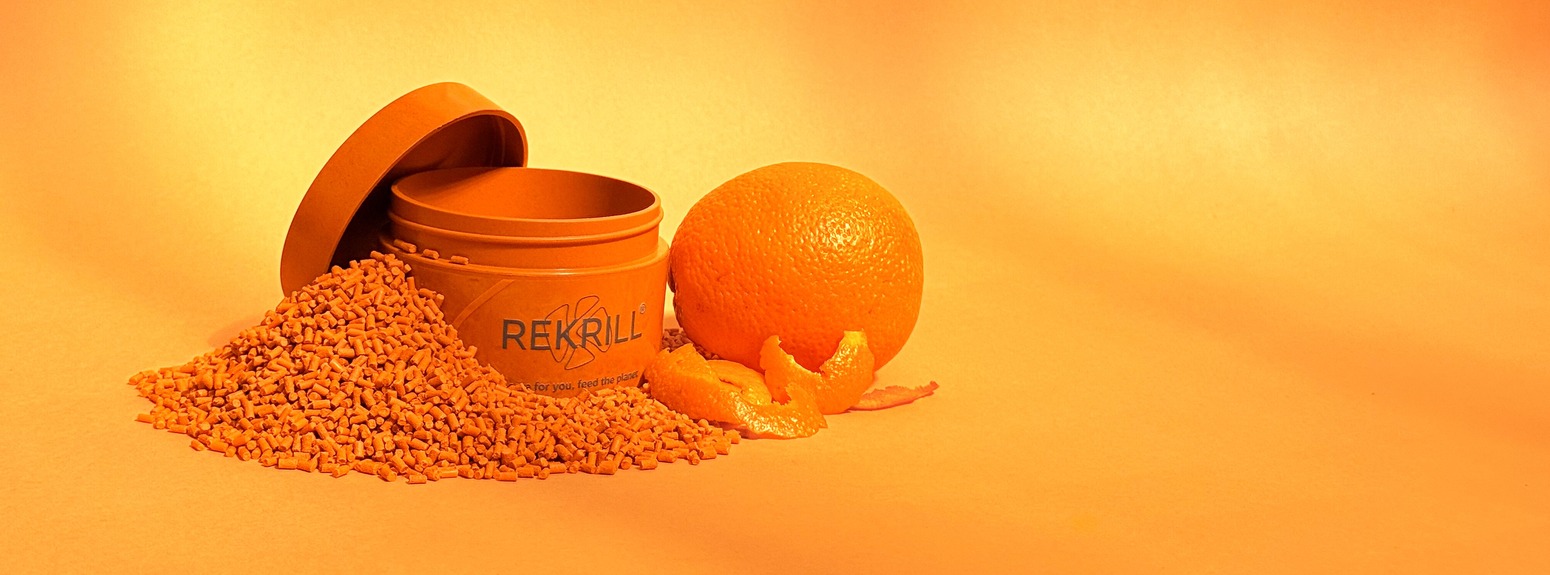
At the core of the project lies a practical question: how can by-products from the agri-food industry be enhanced and transformed into resources capable of generating value within production supply chains? This objective led to the creation of REKRILL®, a proprietary technology that makes it possible to convert plant-based materials — including hazelnut shells, citrus peels, grape pomace, and coffee grounds, along with other selected biomasses — into high-performance thermoplastic materials designed to meet industrial technical requirements.
“Our approach starts from a very simple principle: addressing the problem upstream by rethinking the very origin of materials,” explains CEO and founder Ivan Calimani. “Sustainability only becomes effective when it can integrate into existing industrial processes.”
Unlike many bioplastics, which rely on dedicated crops, the model developed by the company is based on the use of already available resources, avoiding competition with the food supply chain and contributing to a more efficient use of existing materials.
The origins and growth of KRILLMAT: from design to materials production
The company’s origins date back to the context of Expo Milano 2015, when themes such as food, sustainability, and innovation helped shape a reflection on the value of already available resources.
Within this context, two closely connected challenges emerged: on one hand, the waste of by-products from the food industry, and on the other, the environmental impact generated by the widespread use of petrochemical plastics. From this awareness came the question that would guide the company’s development: how can already available materials be transformed into new solutions capable of reducing both resource waste and the impact of conventional materials?
Materials such as orange peels, coffee grounds, and plant residues — generally considered end-of-life waste — represented a material potential that had still been largely unexplored.

In 2018, Krill Design was founded by Ivan Calimani together with Yack Di Maio and Martina Lamperti, initially focusing on design, 3D printing, and materials research. The project took shape through the integration of three complementary backgrounds: the managerial and entrepreneurial experience of Ivan Calimani, previously Project Manager for Expo 2015, Manager of the Food Market in Milan, lecturer in Management at Politecnico di Milano, and founder of OpenLine; the creative and technical profile of Martina Lamperti, a designer with expertise in modeling and graphic design developed through collaborations with Pitti, Samsung, and Eli Lilly, as well as her previous experience as founder of Hy3rids; and the contribution of Yack Di Maio, focused on biomaterials development and innovation, with a project-driven vision linked to sustainability and previous experience as founder of Hy3rids.
From the outset, the goal was to transform organic residues into new objects, exploring the opportunities offered by alternative design and production approaches.
The first applications emerged through collaborations with companies such as Autogrill, which involved the team in enhancing the orange peels generated by its juice bars, later transformed into design products. These projects were followed by further collaborations with San Pellegrino and the Municipality of Milan, as well as the Co.ffee Era initiative, dedicated to collecting coffee grounds from Milan cafés and transforming them into everyday objects.
In 2022, Ohmie was introduced — a lamp made from orange peels that gained international visibility through crowdfunding campaigns, helping demonstrate how bio-based materials can combine sustainability, aesthetic quality, and technical performance.
Through these experiences, a growing awareness emerged: the real element of innovation did not lie exclusively in the final product, but in the material that made it possible.
“Our experience in design allowed us to understand the value of materials not only in technical terms, but also in expressive ones,” notes Martina Lamperti, co-founder and Circular Economy Manager. “That’s where the ambition to bring this approach to an industrial scale came from.”
This transition became firmly established in 2024 with the launch of the industrial production plant development, supported by Crédit Agricole, Primo Capital, and Algebris. The company thus adopted its current positioning as KRILLMAT, focused on the development and production of bio-based materials for industrial applications.
Confirming this path, in September 2025 the company received the “Impresa e Valore” award from the Milan Monza Brianza Lodi Chamber of Commerce, a recognition dedicated to companies capable of integrating economic growth, innovation, and social and environmental responsibility.
REKRILL®: formulation, material, and industrial integration
The material developed by the company represents its technological core and has been designed to adapt to different industrial applications through a formulation approach that combines standard solutions with tailor-made developments.
Alongside a range of base formulations, already optimized for established applications and ready for integration into production processes, the company develops custom materials according to clients’ specific requirements. This approach makes it possible not only to meet technical and performance needs, but also to enhance dedicated production residues — including industrial waste such as processing scraps or specific supply-chain by-products — within circular economy projects.
The first phase of the production process: selection and preparation
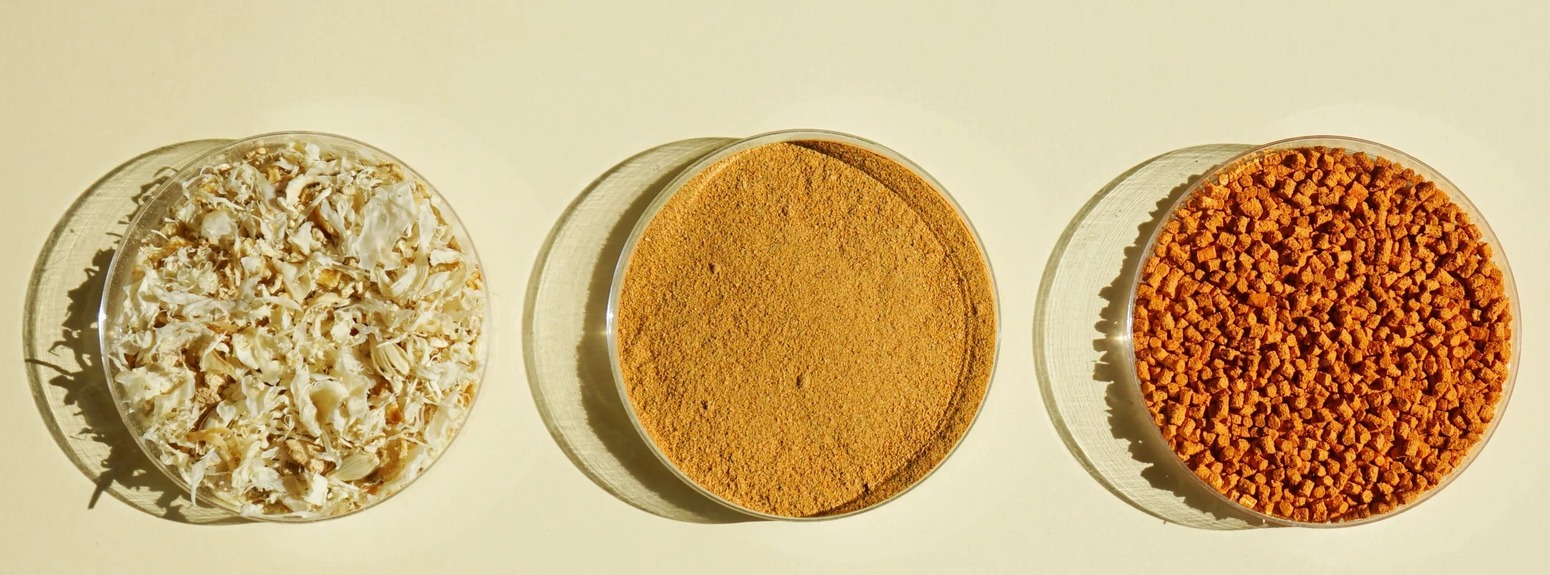
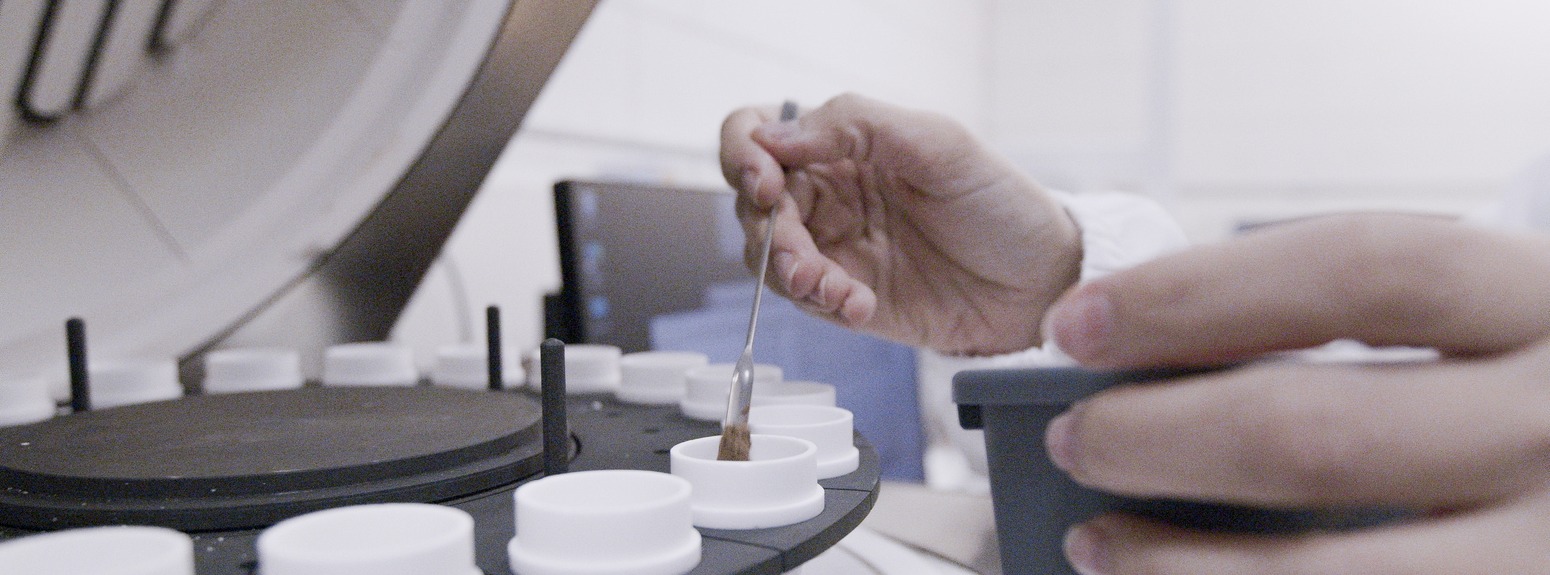
The production process begins with the selection and preparation of by-products, which undergo quality controls, drying, and micronization before being integrated into a bio-based polymer matrix through controlled thermoplastic extrusion.
This activity is supported by an advanced laboratory that enables the development of new formulations, the optimization of material performance, and continuity between the research phase and industrial application.
“The goal is to make the sustainable transition practical and accessible, without introducing complexity into production processes,” explains the Operations Director.
An innovative, circular, and versatile plastic material
In this context, one of the distinctive elements is full compatibility with conventional production processes such as injection molding, extrusion, and rotational molding, allowing the material to be adopted without modifications to existing plants. This is complemented by availability in different formats — including pellets, bars, and sheets — facilitating its use within transformation technologies already present in companies.
The integration of by-products is not simply a technical choice, but the foundation of a circular model in which already available materials are reintroduced into new production cycles, extending their value over time and generating measurable environmental impact throughout the entire process. In this context, the production of one ton of REKRILL® prevents more than 1.8 tons of CO₂ emissions, equivalent to the annual absorption capacity of one hectare of bamboo forest.
The natural component does not define the material’s appearance in a single way, but rather represents a design variable. Depending on application requirements, organic particles may remain visible, contributing to a more material-driven aesthetic, or be integrated more discreetly, resulting in more uniform surfaces.
The result is a high degree of versatility, enabling intervention both at the level of finishing and in the material’s aesthetic character, adapting it to different design contexts.
Applications span several industrial sectors, including packaging, design, consumer products, and technical components for various industrial fields, demonstrating the versatility of the developed solution.
Intesa Sanpaolo and Intesa Sanpaolo Innovation Center as drivers of growth
Throughout KRILLMAT’s development journey, the collaboration with Intesa Sanpaolo and Intesa Sanpaolo Innovation Center represented a key accelerator, particularly during the phases of market expansion and industrial positioning consolidation.
“The relationship with Intesa Sanpaolo Innovation Center has had a significant impact on our growth journey,” says Ivan Calimani. “It allowed us to access high-level environments and engage with international stakeholders.”
Through participation in innovation-focused initiatives and events — including SMAU and internationalization programs — the company had the opportunity to present its proposal to corporations, investors, and industrial partners, establishing direct contact with key players across production supply chains.
These moments of exchange contributed not only to launching new collaborations, but also to validating the positioning of the material in concrete application contexts, facilitating its adoption by companies.
At the same time, the support received strengthened the company’s institutional positioning — a particularly relevant factor in a sector where reliability, execution capability, and integration into industrial processes are decisive elements.
The dialogue with the innovation ecosystem promoted by the Innovation Center, which includes universities, research centers, and incubators, also encouraged the development of expertise and continuous alignment with industry needs.
KRILLMAT’s future outlook: new products, new applications, new partnerships
Looking ahead, the company aims to strengthen its role within the bio-based materials sector by expanding the applications of REKRILL® and integrating new types of by-products into its production model.
The objective is to progressively extend the developed approach to new supply chains, enabling the enhancement of already available resources in different industrial contexts and contributing to the creation of more efficient and circular production systems.
At the same time, the company will continue its industrial growth path by strengthening production capacity and expanding collaborations with industrial partners, with the goal of facilitating the integration of the material into existing processes without introducing operational complexity.
“The goal is to contribute to the construction of a new industrial paradigm,” concludes Ivan Calimani. “A system in which materials are designed from the outset to enhance existing resources and reduce the overall impact on the biosphere.”