
Quantum Computing: applications, challenges and scenarios

20 February 2026
Innovation Center, Future trends, What if, Focus On

Quantum technologies are showing their potential in various industrial sectors. We discuss this with Davide Corbelletto, head of the Quantum Competence Center within the Data, AI & Technology Area of Intesa Sanpaolo.

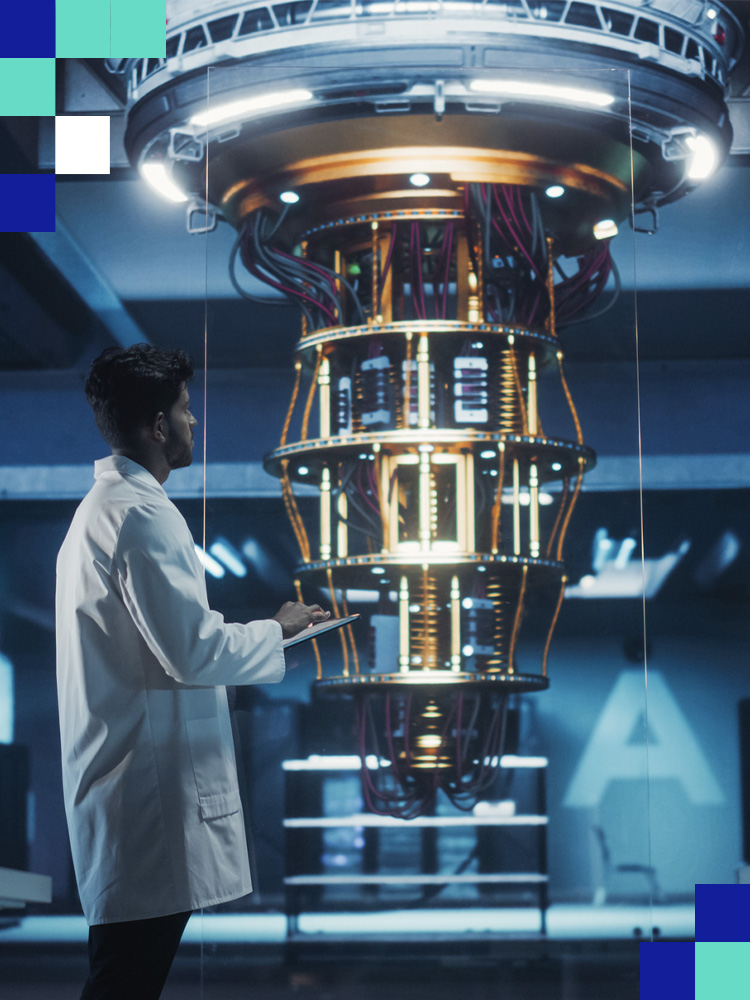
Man in lab coat in front of quantum computer Man in lab coat in front of quantum computer

Quantum technologies are beginning to concretely transform different industrial sectors, paving the way for solutions that just a few years ago seemed unattainable. Thanks to their ability to process information in a radically different way compared to classical systems, these technologies promise to tackle complex problems with unprecedented speed and precision. Applications range from scientific research to security, from process optimisation to the creation of new materials.

Healthcare, chemistry and materials science

Quantum computing enables advanced molecular simulations, accelerating the discovery of new drugs and materials. Quantum sensing enables new forms of ultrasensitive diagnostics, such as next-generation magnetic resonance and monitoring of biomarkers at the cellular level.

The use of Quantum Computing in the field of materials science, chemistry and pharmacology will probably constitute the true scientific killer application of this technology.
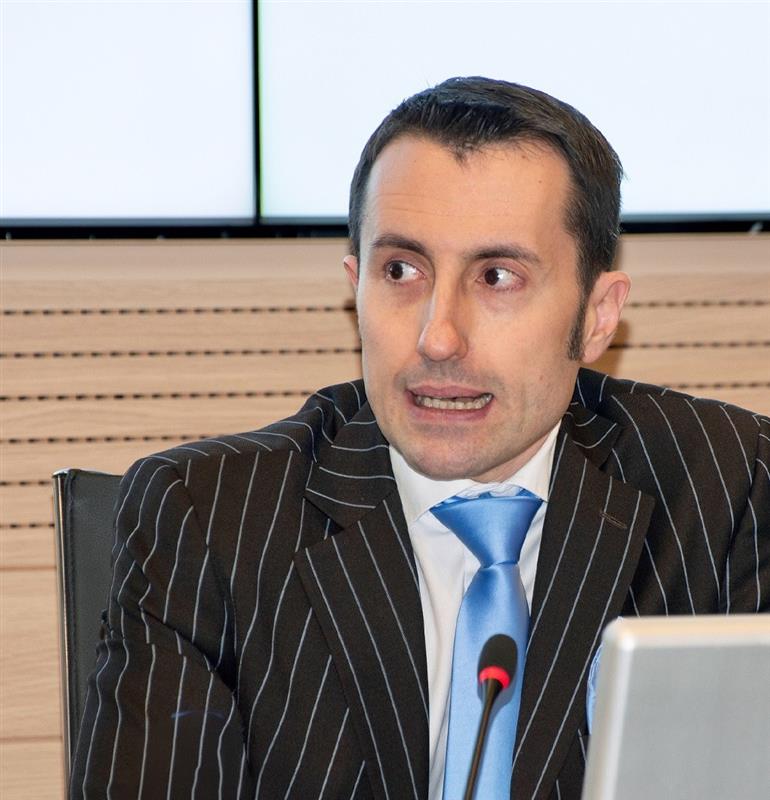
Davide Corbelletto
Head of the Quantum Competence Center within the Data, AI & Technology Area of Intesa Sanpaolo
Davide Corbelletto Image

“Indeed, molecular systems obey, at the subatomic level, the laws of quantum mechanics. Therefore, the behaviour of such systems can only be approximated through a classical computer, whereas a quantum computer can truly simulate their behaviour, representing them in every respect as a controllable and inspectable digital twin.

This will not only result in a drastic reduction in the time and costs of industrial research and development to study new materials and drugs, but will also pave the way to solving problems that could have significant repercussions for all humanity, such as, for example, the possibility of creating tailor-made medicines that, with the same active ingredient, avoid potential contraindications for the specific patient who takes them, or finding more sustainable alternatives to chemical compounds such as ammonia, whose production, although essential in various contexts such as agricultural fertilisers, has a considerable environmental impact.”

Financial services

Portfolio optimisation, risk management, stochastic simulations (simulations that take into account uncertainty and variability in data or processes. In practice, they are used when it is not possible to predict with certainty what will happen, but it is possible to estimate different possible scenarios) and predictive analysis. Quantum Communication and Quantum Key Distribution (QKD) are revolutionising the security of financial transactions and communications, while quantum computing promises to improve fraud detection and the analysis of large databases.

In the banking sector, the Quantum Competence Center of Intesa Sanpaolo is among the first in Europe, as Corbelletto also confirms: “According to what was published last 20 March in its first Banking Brief on Quantum by the London research company Evident, the Quantum Competence Center of Intesa Sanpaolo is, alongside HSBC, ‘Strong Second’ internationally, immediately after the ‘Trailblazer’ Applied Research Center of JP Morgan Chase.

The main challenges we are facing are two: one operational, which concerns precisely the industrial research activities aimed at understanding which are the most promising use cases in which to apply quantum computing to gain a prospective advantage both in terms of efficiency (execution speed) and effectiveness (better quality of outputs).

The other is organisational, with constant awareness-raising and dissemination at all levels, from top management to the governance areas that could be most positively impacted, to create awareness on the subject, and, starting from 2024, also to professionally train a new qualified internal workforce with courses specifically designed and delivered by our team.”

Other fields of application

Energy and transport. Optimisation of smart grids, simulation of new materials for batteries and electrical networks, dynamic management of transport networks and logistics. Quantum computing allows solving NP-hard problems (Non-deterministic Polynomial time, very difficult problems to solve) such as the Vehicle Routing Problem (efficient management of deliveries or transports) in reduced times compared to traditional systems.

Defence, telecommunications, precision manufacturing, aerospace. Applications range from the security of communications to autonomous navigation, from environmental monitoring to the production of advanced sensors.

Quantum chip Quantum chip

Optimisation, simulation and machine learning: use cases

Optimisation, simulation and machine learning are the main macro-groups in which the use cases of Quantum Computing can be classified.

Optimisation

“To optimise, from a mathematical point of view, means to identify, within a set of practicable solutions, the best possible candidate,” explains Corbelletto. “For example, we continuously optimise financial portfolios in order to maximise their returns, while minimising their volatility.

Problems of this type, complex to solve on standard hardware, can ingeniously be reformulated as the search for the configuration that minimises the energy of a quantum system, which is in turn mappable onto a quantum computer.”


Simulations

“Through simulations it is possible to estimate the price of a certain financial instrument on the market or to elaborate the so-called Stress Test Scenarios, which serve to verify the reaction capacity of a credit institution to adverse and unpredictable events,” continues Corbelletto.

However, accurate simulations require the generation of random variables, which we know cannot be accomplished with classical hardware, which can at most generate pseudo-random numbers. This limitation can be overcome by a quantum computer, which is instead able to generate truly random numbers.”

Machine Learning

“Supervised or trained artificial intelligence is now widely spreading in the banking and insurance world, even in its most advanced form, namely generative; the promise of Quantum Computing is to improve the accuracy and speed of response of these algorithms with equal volumes of data involved. This would allow, for example, reducing the energy consumption related to the very long times currently reserved for model training.

Moreover, quantum computing is a candidate to be an excellent tool to also tackle other types of artificial intelligence such as those that learn by reinforcement (that is, by means of a trial & error system where each correct choice is rewarded and incorrect ones penalised) or unsupervised (that is, which cannot be trained from data that are, as they say, ‘labelled’ from the start).”

“Optimisation, simulation, machine learning: in each of these three macro-groups, our competence centre has published at least one industrial research paper, demonstrating that it is possible to obtain some kind of advantage, for example in terms of execution speed or response accuracy, by using quantum computing.”

Future challenges: overview of open points and possible scenarios

Despite the progress, quantum technologies still have numerous challenges to overcome:

  • Scalability and reliability: increasing the number of qubits without increasing errors and instability is one of the main challenges for quantum computing. Error correction and standardisation of hardware/software interfaces are still under development.
  • Training and human capital: the shortage of highly specialised personnel risks slowing the growth of the sector. National strategies aim to fill this gap with training programmes and talent attraction.
  • Technological sovereignty and security: control of the supply chain and protection of critical infrastructures are central issues, especially for dual-use applications and national security.
  • Standardisation and interoperability: the absence of common standards limits software portability and interoperability between different platforms, hindering large-scale diffusion.
  • Sustainability: quantum computing could help reduce the energy consumption of data centres, but the production and management of quantum systems still requires significant resources.
Quantum Computing Quantum Computing

Quantum computing and quantum computing stocks

  • The quantum computing sector is at the centre of attention from investors and the media, with an annual growth forecast between 23% and 31%1. Various companies are already listed on the stock exchange (such as IonQ and Rigetti in the USA), while new players are emerging in Europe and Asia.
  • The quantum computing sector is attracting increasing capital: for example, according to one analysis, in the first three quarters of 2025, over $1.25 billion was invested in quantum companies, more than double compared to the previous year2.
  • Major tech companies are making significant bets: for example, International Business Machines Corporation (IBM) has announced an investment in the United States of about $150 billion, of which ~30 billion dedicated to R&D in mainframe and quantum computing3.

Investments in “quantum computing stocks” are considered high potential, but also high risk, given the technological immaturity and strong global competition.

Training and strategic infrastructures: the most important levers for building a competitive and inclusive Italian ecosystem, capable of attracting talent and investments

“It is necessary to invest in training to create the future workforce that will be required by the labour market in the coming years, which Intesa Sanpaolo has done since 2022 by funding three scholarships in the first Italian Level II Master’s in Quantum Communication & Technology promoted by the Polytechnic University of Turin and, subsequently, also supporting the first Master’s Degree in Quantum Engineering launched in 2023 by the same university,” says Corbelletto.

“Secondly, taking into account the scarcity of computational resources that will inevitably affect this technology, at least in its initial adoption phase, it is very important to equip oneself now with strategic infrastructures on national territory, as, for example, the ICSC Foundation has done, which, through the National Centre for Research in HPC, Big Data & Quantum Computing, has funded the project for the construction of the first Italian quantum computer ‘Partenope’, already installed in 2024 at the Monte Sant’Angelo site of the University Federico II in Naples, or the consortium Links Foundation, INRiM and PoliTo, which purchased the first commercial quantum computer ‘Lagrange’, inaugurated in Turin in May 2025. Both of the hardware in question saw among the first users precisely the staff employed at the Quantum Competence Center of Intesa Sanpaolo,” he concludes.

1 Report "Quantum Technology Monitor – June 2025" di McKinsey

2 The Chronicle-Journal

3 INvestors

WHAT IF...

the discovery of new medicine became almost instantaneous?